
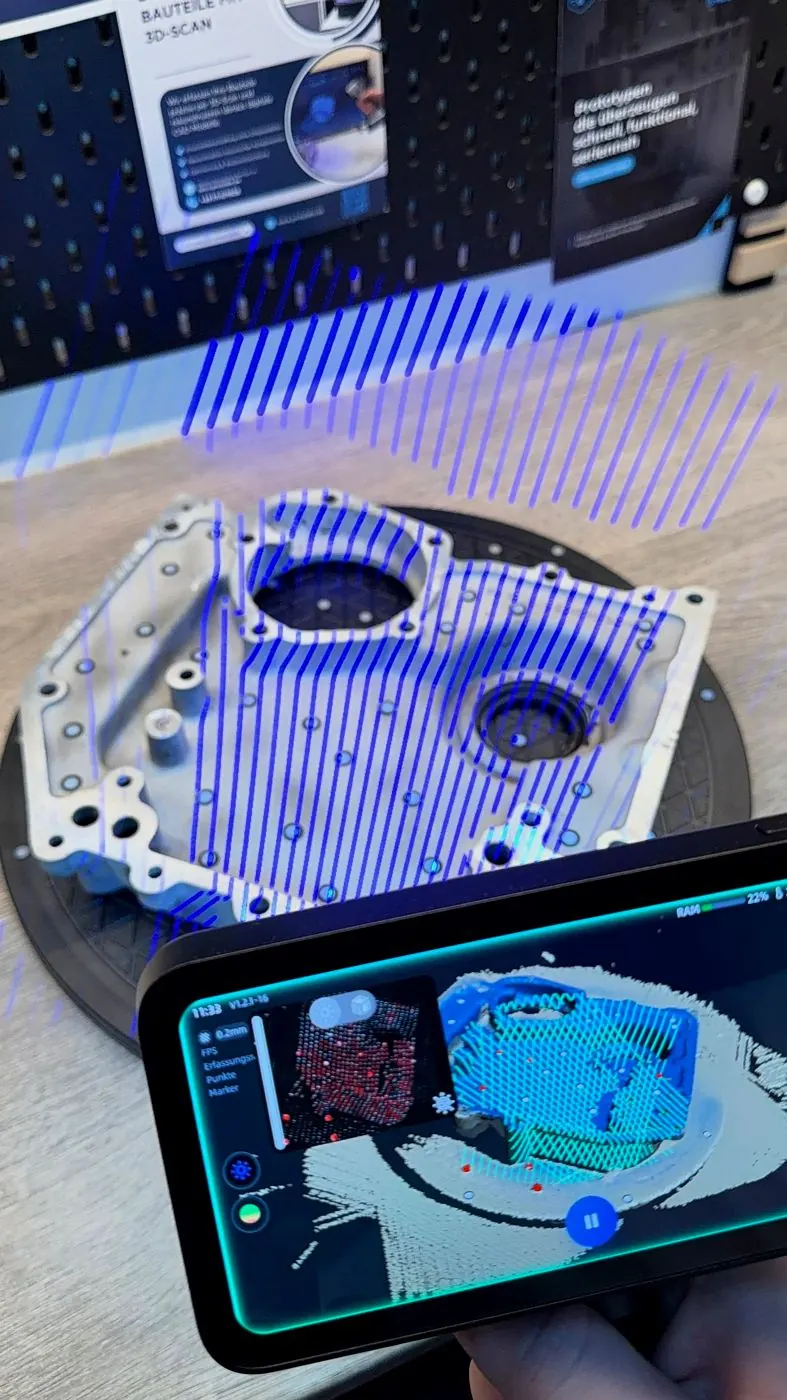
What you need 3D scanning for
Spare parts without original data
Parts for which there is no drawing and no supplier any more.
Reconstruction of old components
Classic car parts and components of older machines.
Optimisation
Improve, adapt or reinforce existing parts.
From original part to new part
- Step 1
Scan
We capture the geometry of the component.
- Step 2
Processing
The scan data is cleaned up and merged into a model.
- Step 3
CAD reconstruction
You receive clean STEP data and a target/actual comparison between scan and model.
- Step 4
Manufacturing
On request we print the part directly in a suitable material.
What we need from you
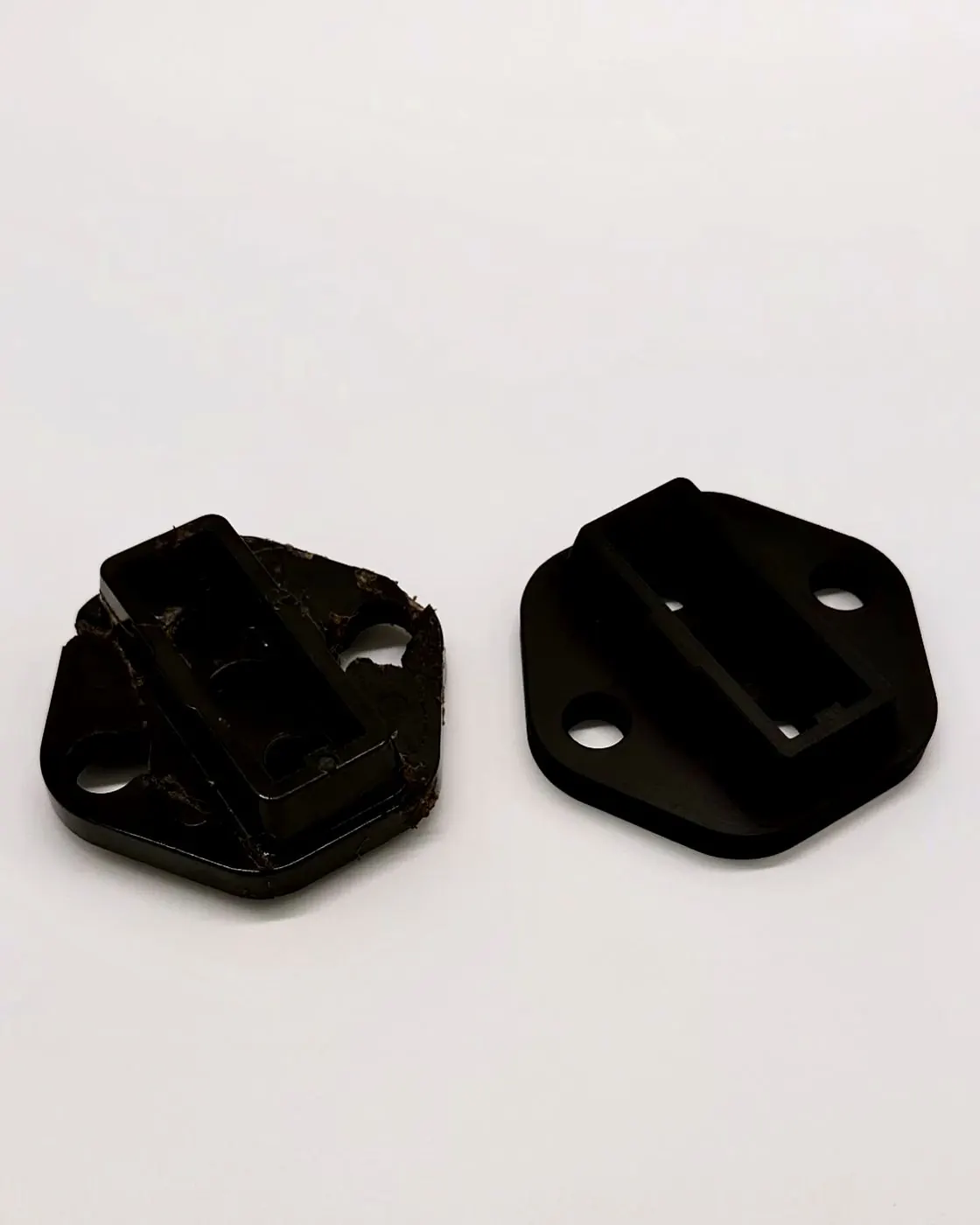
What is reverse engineering – and how does a part become a CAD model again?
Reverse engineering means creating a digital model from an existing part that can be used to manufacture, modify or improve it. The basis is a 3D scan: the scanner captures the surface without contact as a point cloud or triangle mesh (STL).
A scan alone is not yet a CAD model. For manufacturing and changes, we redesign the part based on the scan data – with clean surfaces, real holes, planes and radii. The result is a STEP file you can use in any CAD system. A colour-coded target/actual comparison shows how closely the new model matches the original.
This pays off above all for spare parts without drawings, for classic car and machine parts that are no longer available, and when an existing part is to be improved – lighter, stronger or suitable for 3D printing. On request we print the part directly in the right material, in plastic or metal.
What you get
| Scan data | triangle mesh (STL) of the original |
|---|---|
| CAD model | STEP – usable in any CAD system |
| Verification | colour-coded target/actual comparison scan ↔ model |
| Optional | technical drawing with dimensions and tolerances |
| Optional | printing the part in plastic or metal |
| Starting point | the original part – damaged is fine |
| Quote | within 24 hours |
The achievable accuracy depends on size, shape and surface. We state it for your part in the quote.
What drives the price
- Size and shape complexity of the part
- Surface: shiny, dark or transparent parts need more preparation
- Result: scan mesh only or a fully designed CAD model
- Required accuracy and tolerances
- Extras such as drawings, optimisation or printing
How to speed things up
- Send the part clean and as complete as possible – include broken pieces
- Describe the installation: which surfaces are functional, what may change?
- State known dimensions, e.g. hole spacing or shaft diameter
- Name the desired material and quantity
- Photos of the installed part help with the design
A part that no longer exists?
Bring it or send it to us. We will tell you whether and how we can remanufacture it.